 The chapter begins in London on July 12, 1890 outside Westminster Abbey, where Henry Morton Stanley is to be married to Dorothy Tennant. While there were economic reasons for wanting to seize Africa, most often psychological reasons fueled the explorers. This explained Stanley's desire to discover, as he had feared intimacy while at the same time he craved acceptance. Having finally reached the upper class, Stanley decided to devote his time to being famous; his marriage marked the end of his exploration days.
Introduced is the character of William Sheppard. Sheppard was a respectful and nonviolent explorer who made significant discoveries yet doesn't show up in the annals of exploration because he didn't "fit the conventional image of the white explorer." Probably because he wasn't white. Born in Virginia in 1865 he went to the State's Hampton Institute and then the Colored Theological Seminary, before working as a Presbyterian minister.
Sheppard sets out with Reverend Samuel Lapsley, and the two arrive in the Congo in May 1890. The two have a sort of friendship; Lapsley's letters home speak of Sheppard in an admiring tone. The things he said "would have been nearly impossible for a white man to voice for a black back home." Unfortunately in 1892 Lapsley goes to Boma for mission business and ends up dying of bilious hematuric fever.
Following Lapsley's death the Southern Presbyterians are embarrassed that their mission is headed solely by a black man. The church sends more white Presbyterians to the Congo as a result. Sheppard however was said to be well-liked by white and blacks alike. His popularity, charisma and characteristics helped him along the way. When he discovered Ifuca he was in danger of being beheaded, but his dark skin and ability to speak Kuba led them to thinking he was a reincarnated spirit (of Bope Mekabe) which saved him and his followers. Sheppard soon heads back to the United States, stopping at London along the way.

Leopold's officers had to compel the officers to make it. To do so they would attack the villagers in order to seize the women, children, and elderly. They would hold them hostage; the only way to free them was for the men to pay for them kilos of rubber.
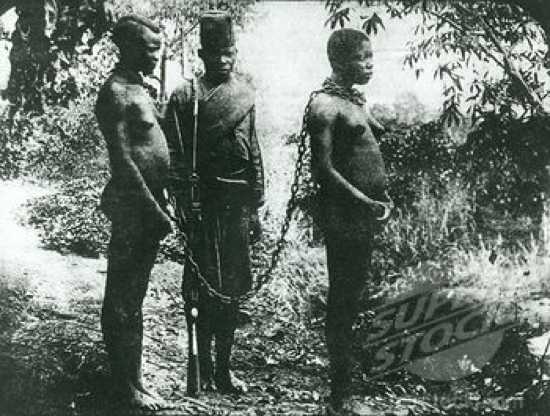
The chapter focuses a lot on the atrocities that occurred due to the rubber boom. Another one of Leopold's policies was to keep track of the number of people that were killed. As proof it was standard to chop off the right hand of the corpse. This is why people soon began to associate Congo with severed hands. This also was why the myth about corned beef gained credence. It was a "curious reversal of the white obsession with severed hands."
Quiz Questions:
1. What is the significance of the title of the chapter?
2. How does Lapsley treat Sheppard differently than normal and how is this treatment similar to / different from whites leaving behind their bourgeois mentality as mentioned earlier?
3. Why is the juxtaposition of Sheppard’s efforts and the rubber boom significant?
4. How was Sheppard able to become accepted by the people and king of the Bakuba kingdom?
5. Why did Leopold want to harvest rubber so quickly? How did this lead to quotas and what types of atrocities did quotas lead to?

No comments:
Post a Comment